Pricing Countertop Jobs with Capacity and Complexity in Mind
Build a pricing discussion around the actual work, available capacity, and assumptions behind the proposal.
Updated October 4, 2026
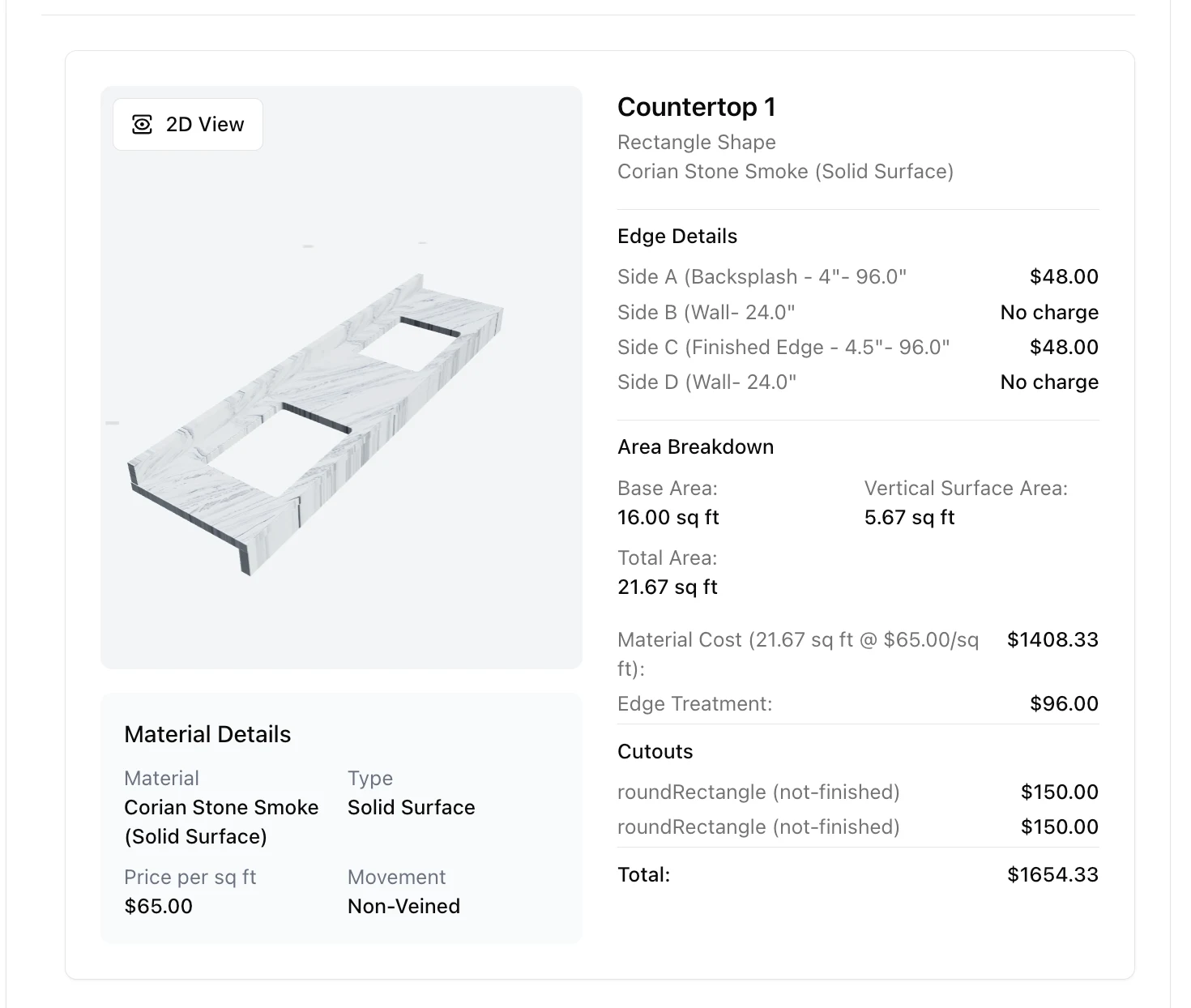
Square footage is only a starting point
Two jobs with the same area can require very different effort. Edge profiles, cutouts, waterfalls, seams, access, handling, and installation conditions all affect the work. A pricing process should make those differences visible.
Begin by separating material, fabrication, installation, and other services. Review what is included in each rate so work is neither missed nor charged twice.
Define complexity in observable terms
Use details your estimators can identify consistently. A difficult access condition is more useful than a vague label such as “hard job.” An unusual edge or a large piece requiring extra handling should have a clear pricing rule or review step.
Document who can adjust a price and why. This makes exception handling teachable and keeps the customer proposal understandable.
Consider the schedule responsibly
Available capacity changes the practical cost of accepting work. A tight deadline may require overtime, special coordination, or a different installation plan. Confirm those requirements before promising a date.
If your shop uses rush charges or capacity-based adjustments, define when they apply and explain the relevant terms clearly. Do not rely on an unexplained multiplier to solve scheduling problems.
Keep the options comparable
When discussing material or design alternatives, show the corresponding scope and price for each option. Preserve the assumptions that do not change so the customer can compare the decision fairly.
A revised proposal should make it clear which version is current. Keep a record of the approval and the details that will reach the production team.
Review estimated work against actual work
Look back at completed jobs to understand where the pricing model missed effort or used outdated assumptions. Include the people who fabricated and installed the work in that review.
Use the findings to refine a specific rule. When evaluating software, test how your rates and exceptions are represented rather than assuming that “dynamic pricing” means the same thing in every product.
Price a change in scope explicitly
Consider an illustrative job with a standard edge and one sink cutout. If the customer adds a waterfall panel, review the extra material, finished edges, handling, fabrication, and installation work. Show the scope change separately so the customer can see why the total changed.
Capacity can inform your shop’s scheduling and commercial decisions, but this example does not assume that software automatically raises prices when the shop is busy. Use your configured rates, review the work, and communicate any deadline or rush charge before approval. See countertop quote preparation in 2cm and the inputs a pricing system needs.