Using 3D Views and Interactive Quotes to Keep Jobs Moving
Reduce avoidable back-and-forth by making the design, choices, and approval step easier to understand.
Updated October 4, 2026
Find the questions that keep returning
A proposal can stall when the customer cannot picture the design or tell which details are included. Repeated questions about an edge, material, or layout often signal that the presentation needs a clearer reference.
Review recent quote conversations and identify the information customers needed before deciding. Use that evidence to improve the next proposal.
Put the visual beside the scope
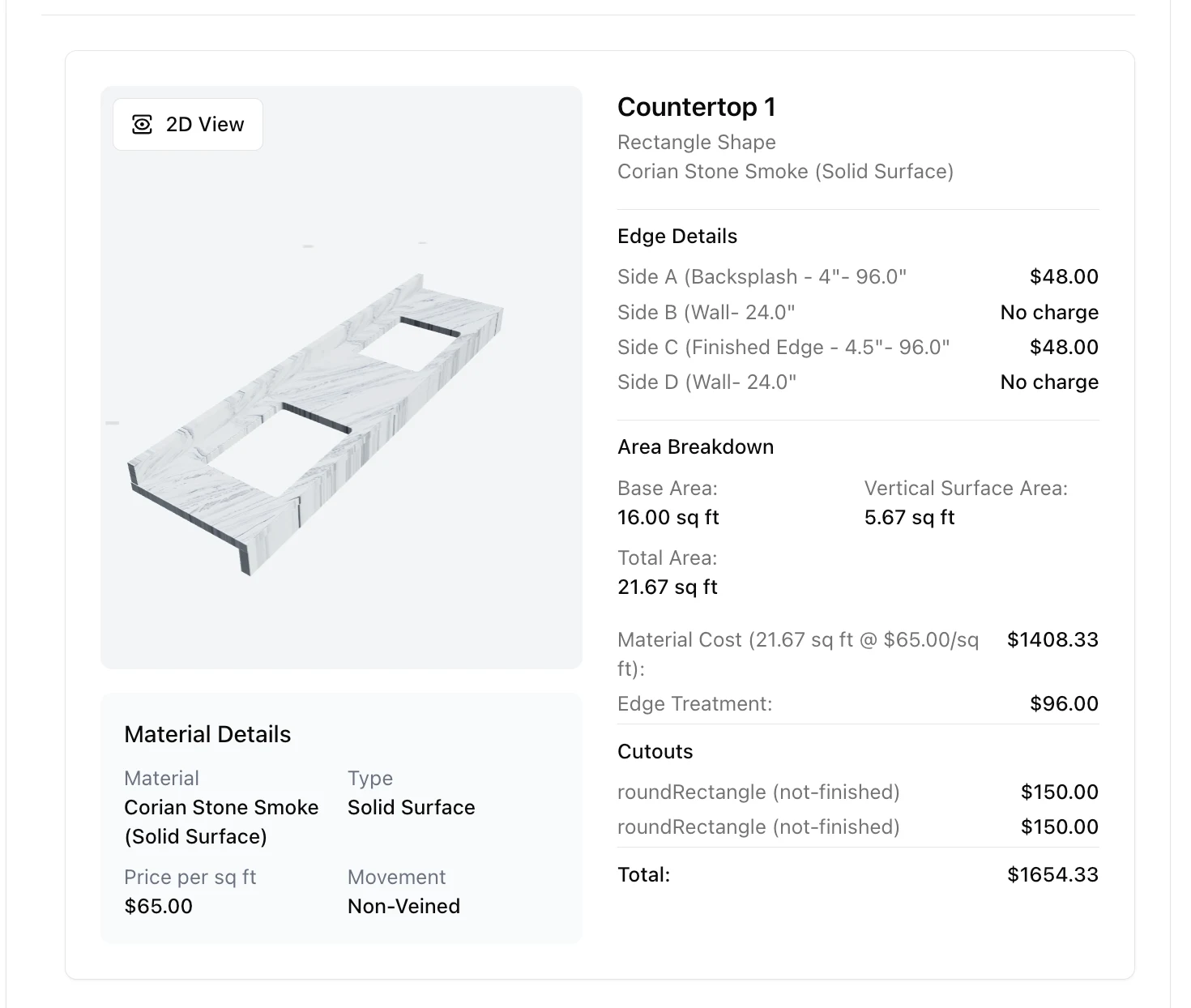
A 3D view can help explain the countertop’s shape and material choice. It works best alongside a written scope that names the details being priced. Keep the drawing, visual, and line items consistent.
When an option changes, check all three. A customer should not need to reconcile an old image with a new price.
Give each revision a clear purpose
Organize changes around the customer’s decision. Show what changed, why the price moved, and which assumptions remain the same. Identify the current version and the action you need from the customer.
Avoid sending several competing documents without a clear relationship. Keep the approved version available to the team that will deliver the work.
Preserve the necessary checkpoints
Faster communication should still allow time for meaningful review. Physical slab selection, field measurements, seam decisions, and fabrication constraints may need separate confirmation.
Explain these checkpoints early so an online approval is understood in the context of the complete job.
Measure your own process
Track where proposals wait and why. Distinguish time spent on customer decisions from time waiting for missing information or internal review. Compare similar jobs over a useful period.
A demo can show how 2cm presents a design and quote to the customer. Your own workflow review establishes whether that presentation solves the delays your shop actually experiences.
Resolve a design change before the handoff
Suppose a customer requests a different island overhang after reviewing the design. Update the geometry, check the material requirement, and review the price before sending the revised proposal. Ask the customer to approve the current scope rather than relying on an earlier conversation.
The benefit is a clearer decision trail; there is no universal number of days that every shop will save. Use the shared quote to discuss the design and pricing together, then coordinate the job in project management. Measure the result against your own revision history and approval dates.