Better Countertop Manufacturing Starts with Better Job Data
Choose useful shop measurements, define them consistently, and turn the findings into practical improvements.
Updated October 4, 2026
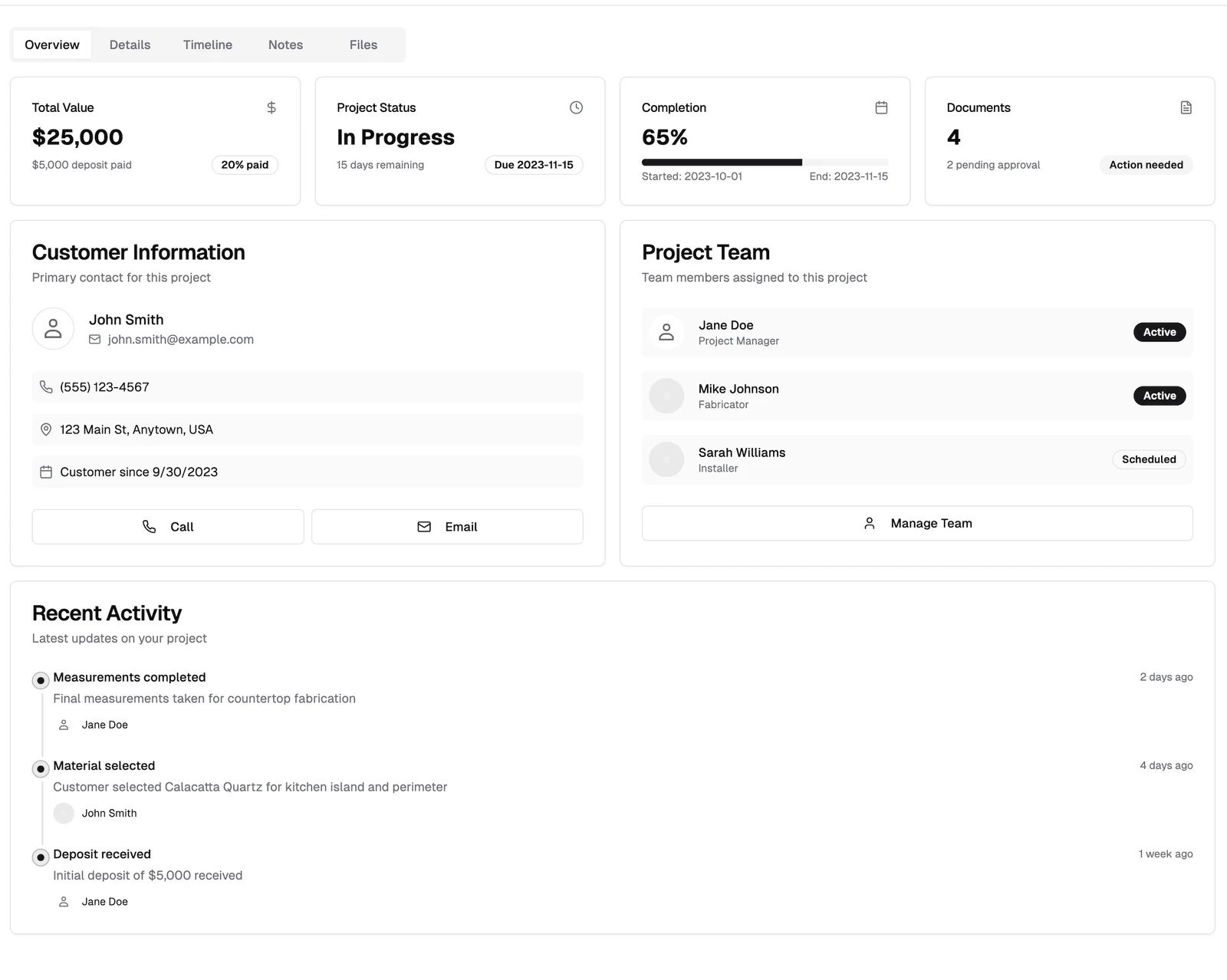
Start with an operational question
A dashboard is useful when it answers a question the team can act on. Where are jobs waiting? Which details create rework? Why does a material estimate differ from what was consumed? Choose a specific question before collecting more data.
Avoid beginning with a large reporting project. A focused review of one recurring problem is easier to sustain and gives the team a reason to keep records accurate.
Define the measurement
Write down what each measurement means. Quote turnaround might run from receipt of a complete drawing to the first proposal, rather than from the first customer inquiry. Rework might include only internal corrections, or it might also include customer changes.
These definitions affect how results are interpreted. Use the same definition across jobs and keep exceptions visible.
Follow the job through the handoffs
Look at the transitions between estimating, approval, templating, fabrication, and installation. Record when work is ready for the next step and what information is missing when it waits.
The source of a delay may be upstream. A production question can start with an unclear sales assumption; an installation issue may begin with an unrecorded field condition.
Read the context alongside the number
A complex waterfall project should not be compared blindly with a straightforward vanity. Material, access, scope, and customer revisions affect time and cost. Group similar work and review outliers with the people who handled them.
Separate observations from explanations. A pattern in the records is a starting point for investigation, not proof of its cause.
Close the improvement loop
Choose one change, name an owner, and define how you will review the result. Update the workflow or checklist so the lesson becomes part of everyday work.
Connected drawing, quote, and project records can make this review easier. Confirm the reporting and export capabilities you need when evaluating software, using examples from your own shop.
A simple quote-to-approval review
For each job, record when the first complete proposal was sent and when that version was approved. Keep revisions distinct: a change of material is a different delay from a missing email address. Review those intervals alongside the job notes before deciding what to improve.
If several proposals wait on a material decision, improve the material presentation rather than assuming the estimating team is too slow. This is an example of a review you can run with your own records, not a claim that 2cm automatically produces this report. The project workspace helps keep the job’s context together; the approval handoff explains which decisions to preserve.