Where AI Can Help a Stone Fabrication Workflow
Explore practical uses for AI assistance while keeping measurements, pricing, and production decisions reviewable.
Updated October 4, 2026
Start with a specific task
AI is most useful to evaluate through a concrete task: interpreting a drawing, organizing information, or helping an estimator review a job. A broad promise of automation gives a shop little basis for deciding whether a tool fits.
Identify the repetitive work you want to improve and the output the next person needs. Bring representative examples, including difficult ones, to the evaluation.
Keep the source information available
Drawing analysis depends on the quality and context of the plan. Missing dimensions, ambiguous symbols, scans, and revisions can affect the result. An estimator needs a way to inspect the source and correct the interpretation.
Review the scale, geometry, edges, and cutouts before relying on quantities. AI assistance does not remove the need for a responsible person to check the job.
Connect the result to shop rules
A detected shape is not a complete quote. Material selection, fabrication details, labor, and your shop’s service rates still determine how the work is priced.
Evaluate how the proposed workflow connects those inputs. Automatic steps are more useful when the estimator can explain the final proposal.
Separate a sales estimate from production
A sales drawing supports scope and pricing. Production still depends on final field measurements, actual slabs, seam decisions, machine requirements, and the shop’s quality process.
Keep those responsibilities explicit when introducing new tools. A clean digital preview should not imply that every fabrication condition has been verified.
Run a measured pilot
Start with a defined set of jobs and compare the results with your current process. Record where assistance helps, where corrections are needed, and what the team must learn.
2cm combines takeoff, design, materials, and quoting in one workflow. A working demo with your plans is the right place to assess the available assistance and its limits.
Give the estimator a reviewable starting point
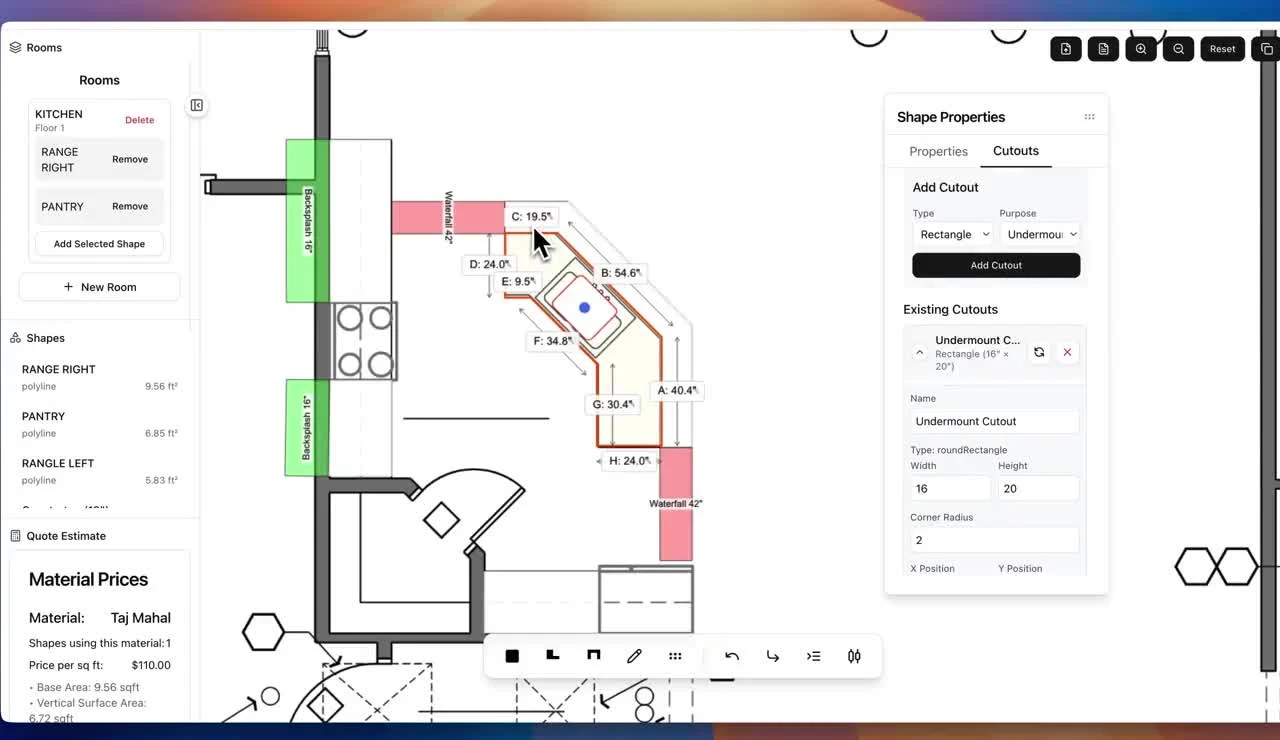
Use a plan with known dimensions and a familiar countertop layout when evaluating AI assistance. Compare the suggested geometry with the source: check omitted pieces, edges, sinks, and cooktops. Correct the takeoff before deciding whether the generated price makes sense.
Measure the amount of review work required on your own examples. Do not judge the workflow only by how quickly a draft appears. The 2cm takeoff page shows the plan-to-quote process. The quoting-system checklist explains the next step: connecting reviewed quantities to the shop’s pricing rules.